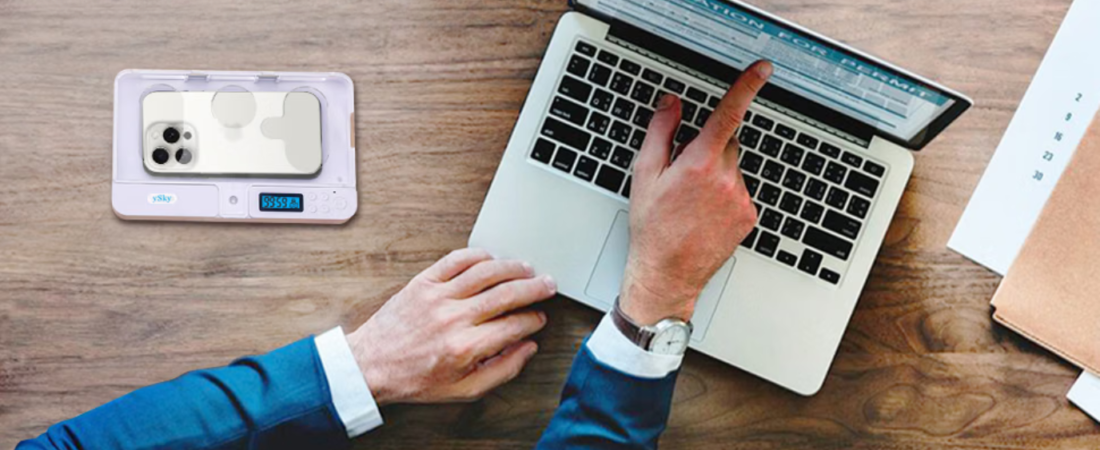
Want to kick your doomscrolling habit but don’t know if a phone lockbox or dumbphone is a better choice for you? If you’re on the fence, a phone lockbox may be a less drastic option worth considering before you go full dumbphone, especially if you still need some of your smartphone’s functions such as GPS, mobile banking, and texting. A lockbox can help you disrupt the tendency to reach for the phone during specific hours. If you’re ready, however, for all the conveniences and distractions to be eliminated 24/7, a dumbphone is the way to go. The dividing line is simple: can you plan a normal day without your phone’s non-call features, or not? If the answer is no, start with the box, not the trade-in.
Why Friction Works Differently Than Removal
Both swaps solve the same problem — the automatic reach for a phone. But two different mental mechanisms are at play and picking the wrong one can send you back to your smartphone within a week. A lockbox adds friction: the smartphone stays exactly as it is, apps and all, but getting to it costs a deliberate extra step. A dumbphone swap removes the temptation instead of managing it — there’s no feed to reach for because the feed isn’t in the pocket at all.
Researchers at the Korea Advanced Institute of Science and Technology tested this distinction directly, running a four-week field study that compared restrictive smartphone lockout methods against softer, warning-based ones. The restrictive approach cut phone use more effectively, but it also produced more frustration and pushback — and the researchers traced that friction to a single cause: one fixed rule doesn’t fit everyone’s usage patterns and daily context equally. That’s the actual argument for treating this as a decision between two swaps rather than defaulting to whichever one is more talked about.
Taking a more personal approach to making this decision rather than relying on reviews and comments from others made sense to me. Writer and founder of The Happiness Project Gretchen Rubin reiterates in her article “Don’t Fall for the Common Habits Myth” there is only one one-size-fits-all-solution to any habit shift: “Follow the habits that work for you, that help make you happier, healthier, and more productive…When we shape our habits to suit our own nature, our own interests, and our own values, we set ourselves up for success.”
Letting Personal Habits Choose Between Lockbox and Low Tech Phone

Instead of researching and then buying, I decided to figure out what my habits actually were and then craft a solution that would work for ME. I started by running a gradual one-month test to track specific habits and the emotions elicited when reducing or removing scrolling. For two weeks I set a phone-free time each evening and moved my phone into an inconvenient location. I then kept a log of how removing the phone made me act and feel. For the last two weeks of the month, I used a free app during the day to lock myself out of any distracting apps I might be habitually accessing. I also tracked how many times I used smartphone features like GPS and texting to do normal day-to-day business.
What the Test Revealed
While this wasn’t a perfect test, it did give me some valuable personal habit information. The evening test revealed every unconscious reach, including a couple I didn’t expect — pulling the phone out just to check the time or scroll while I was actively doing something else. I even caught myself going to get the phone when there was no reason to do so and was aware of the itch for the lockout to end so I could make sure I hadn’t missed something “important.” The level of habitual checking was eye-opening.
Locking myself out of apps during the day showed me I was unconsciously opening apps when I was talking on the phone or engaged in an activity that didn’t require my direct input. There were moments when I considered giving up and disengaging the app lock because the urge was so strong. That showed me the “multi-tasking” or self-distraction habit was a lot more entrenched than I thought. I rarely did one thing at a time or without disruption as long as the phone was available. I did, however, use other smartphone features regularly that I determined would require significant personal changes if removed.
My ultimate decision was to combine an evening lockbox with a daytime screen-time reduction app to curb my worst doomscrolling habits while still retaining some smartphone features. I’m still in the process of unlearning the phone compulsion but using tech tools and habit tracking have raised my awareness tremendously and allowed me to more consciously choose when I engage.
At a Glance: Lockbox vs. Dumbphone
| Phone Lockbox | Full Dumbphone | |
| Best at | Scheduled windows without losing GPS, banking, or the camera | Removing the reflex completely, all day, not just on a timer |
| Shows up as | A locked object left out on the counter or nightstand | A pocket swap, worn like the phone used to be |
| Falls short on | The reflex the moment it’s unlocked again | Anything that needs an app — maps, 2FA, mobile deposit |
| Best first step for | Someone who needs their phone’s other functions on a normal day | Someone who’s already tried scheduling and the phone still wins |
How a Phone Lockbox Actually Interrupts the Reach
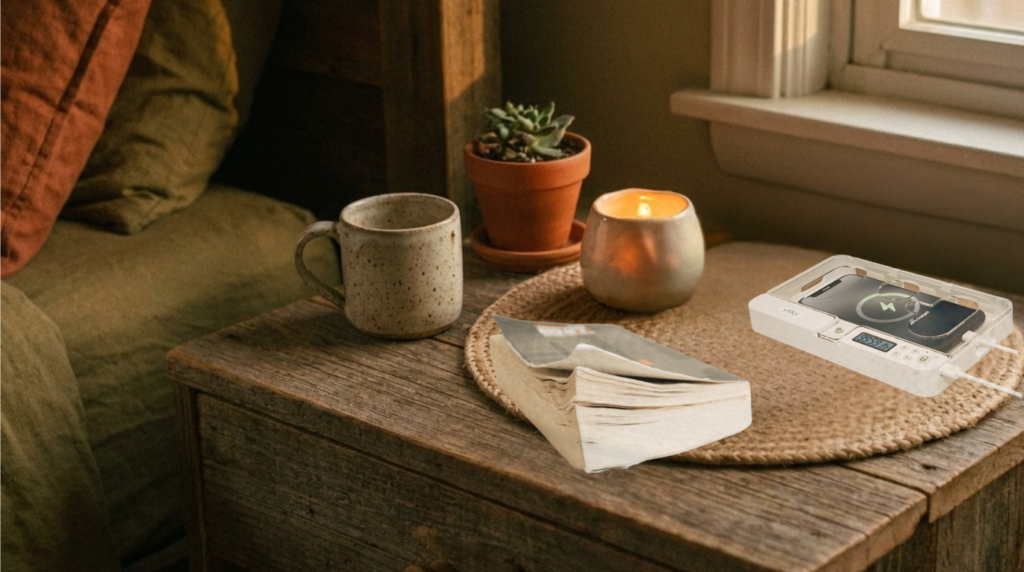
A timed lockbox is a small case — often wood, woven, or matte-finish plastic — built around one mechanism: set a window, close the lid, and the case physically won’t reopen until the timer runs out. The phone still receives texts and calls the entire time; it just can’t be picked up and opened. That gap is the whole point. The reach for a phone is close to automatic, and a lockbox puts one visible, deliberate obstacle between the hand and the habit.
Because the box sits out in the open instead of in a drawer, it doubles as a small piece of counter or nightstand styling — a wood-lidded box or a woven tray reads as a considered object, not a gadget, which matters if the goal is a station you actually want to look at every evening.
This suits anyone who still needs their phone’s other functions on a normal day — GPS, a banking app, a work channel that pings after hours — and wants a scheduled window instead of a full device swap.
How a Full Dumbphone Swap Removes It Entirely
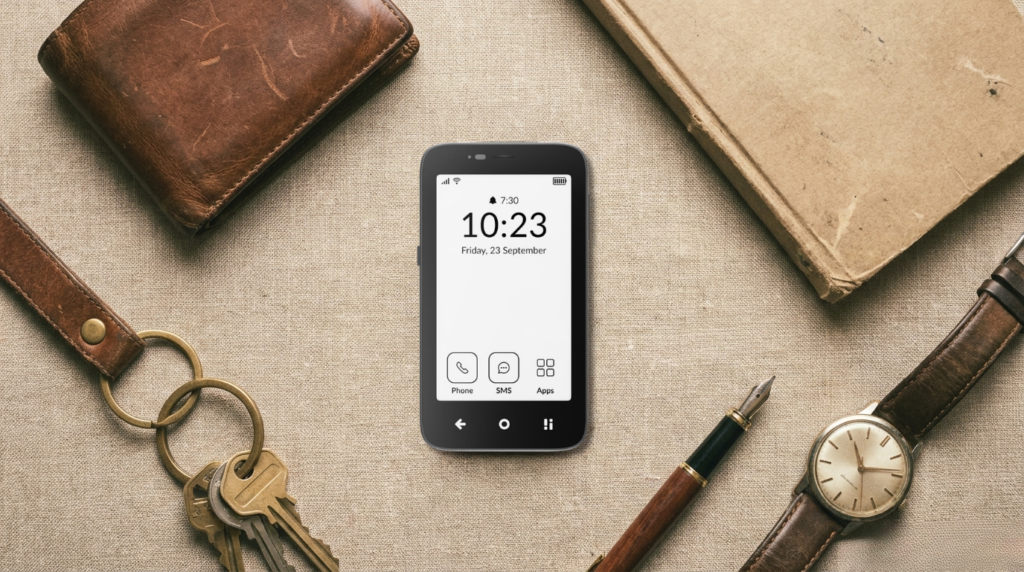
Going full dumbphone means the everyday-carry device changes, not just the schedule. You can keep a smartphone for specific tasks, but it can stay home, charging on a shelf or a tray until you need it, while a basic call-and-text phone goes in the pocket or bag instead. There’s no unlocking involved because there’s nothing behind a lock screen worth reaching for — no feed, no stacked notifications, no app to check “just for a second.”
The physical object does real work here too. Current dumbphones tend to run small — a compact clamshell or a slim bar shape that photographs more like a wallet or a piece of jewelry than a slab of glass, and fits into a small bag with room left over. That’s a meaningful shift for anyone who wants the swap itself to look intentional, not just function well.
A Hybrid Approach to Dumbphones
Another solution might be one of the newer hybrids on the market that offers some premium features but limit the most addicting aspects of smartphones. Some newer model dumbphones are specifically designed to shut out the “attention economy” rather than remove all mobile phone conveniences. Kaiwei Tang, cofounder of mobile phone company Light, says in a CNN article ‘Dumbphones’ Are Getting Smarter and More Premium. “Every free app, every social media platform, every browser, is trying to maximize engagement so they can make money collecting data and categorizing people into different groups so they can sell it to advertisers.” Tang and partner Joe Hollier set out to create a phone that nixed advertisements and endless feeds to scroll. They also switched the phones to a black and white, text-based display, a trick that research and in practice reports show can reduce screen time.
If you’ve already tried a scheduled restriction and found the smartphone always wins the moment it’s unlocked again, carrying a dumbphone or switching to a hybrid may be your ticket to scroll-free living.
The Aesthetic Difference Actually Matters Too
A lockbox is a static object — it sits somewhere visible, so its look can be intentional. Natural wood, canvas, or a woven lid reads as decor; a bright plastic case with a digital countdown reads as a gadget parked on the counter. A dumbphone is a carried object instead, closer to a watch or a wallet than a piece of home decor, and a matte finish or a simple case color carries the same visual weight a phone case used to.
Neither swap needs to look austere to work. The lockbox can sit on a tray next to a candle and a small plant exactly the way any other counter styling would, and a dumbphone can go into a decorative tray with your keys. The point of both is the same: make the object visible enough that it does the reminding instead of your memory.
If you’re someone that likes to maintain a specific look, choosing natural materials for a lockbox station or a compact retro shape for a pocket swap can make changing the habit a little less bothersome.
Which One Shows Results Faster
A lockbox can produce a result the same night, at least in understanding. The scheduled window either holds or it doesn’t, and you know by bedtime. What it doesn’t do is touch the rest of the day unless you schedule in more locked time, which may not be practical. The same phone with the same apps comes right back out once the timer ends, so the overall reduction may plateau quickly and create more frustration than intended. And that’s where the willpower comes in again. You are required to manage the discomfort of being locked out AND the urge to overindulge when you get back in. This can lead to abandoning the lockbox completely.
A dumbphone swap is slower to show anything. The first week or two usually feels like losing a tool, not getting time back. Your hands have to relearn what to do without a phone in them. Your brain has to adjust to fewer distractions. You have to sit in the agitated, fidgety feeling that comes with breaking a habit. But because the reflex has nowhere to go for the entire day, not just a scheduled block, the total reduction tends to be larger once it settles in.
Someone looking for a win this week rather than going cold turkey may find the lockbox is a gradual fix that works with continued self-monitoring. But if you’re aware you need a more direct intervention that doesn’t allow you to cave, switching to a dumbphone may be the way to go.
Where Each Swap Actually Falls Apart
The lockbox timer gets negotiated. A version with a code you set yourself gets overridden the first hard week. The fix is a model with a mechanical timer, not a combination you already know, and storing any key or app control somewhere less convenient than the box itself.
The dumbphone swap often gets abandoned because of ongoing tasks the rest of the world demands. It might be a two-factor code, a work app, or directions you can’t get another way. The solution to staying the course may be to keep your smartphone as a bridge until you learn to substitute other actions in response. Keeping the smartphone as a tool stashed away for specific tasks you can’t avoid may be a good transition instead of trying to go fully smart device-free on day one.
The key to success may be in how you design the transition to either method. Wendy Wood, a research psychologist at the University of Southern California found that strong habit maintenance doesn’t rely on willpower or discipline but on better-designed environments. Making desired behaviors easy, visible, and automatically cued, while introducing higher friction for undesirable habits determines how well either stick. For these two digital detox methods, the swap may only work by making the solutions visible. A lockbox tucked into a drawer between uses requires remembering to take it out each evening. A dumbphone that is frequently abandoned “just in case” rather than visibly placed with your keys or purse as the go-to when you leave the house is likely to permanently end up in a junk drawer.
Common Questions
Is a phone lockbox the same as turning off notifications?
No. Silencing notifications still leaves the phone unlocked and in reach — the reflex to check it stays intact, it’s just quieter. A lockbox removes the option to open the phone at all until the timer ends, which is a different mechanism, not a stronger version of the same one.
Can a dumbphone really replace a smartphone completely?
For calls and texts, yes. For mobile banking, two-factor codes, or navigation, usually not — most people who go full dumbphone keep their old smartphone at home, charging, for those specific tasks rather than trying to solve everything with one device.
How long should a lockbox session run?
Most people start with 30 minutes to two hours around a specific trigger — dinner, the hour before bed — rather than locking it away all evening. Shorter windows that actually hold beat long ones that get overridden by day three.
Do calls and texts still come through while a phone is locked in a lockbox?
Yes. The phone stays connected and receives everything normally; the lockbox only prevents it from being opened and used until the timer runs out, so nothing about connectivity itself changes.
Which swap makes sense to try first?
A lockbox, generally — it’s the lower-commitment test that tells you whether the reflex is a scheduling problem or a device problem, and that answer is what decides whether a full dumbphone swap is worth the bigger change.
The Bottom Line
Neither swap is the “right” one — they solve the same reflex from opposite directions, and picking the wrong one for your actual day is the reason most attempts at this stall out by week two. If your day still runs through your phone’s other functions, start with a lockbox and a scheduled window. If you’ve already tried scheduling and watched your resolve tank anyway, the full dumbphone swap is the one built to actually hold. Either way, the object needs to be visible enough to do the reminding instead of your memory.
Not sure which analog swap actually fits your evenings? Take the quiz to find your best Stop Scrolling swap.
Sources
GoalKeeper: Exploring Interaction Lockout Mechanisms for Regulating Smartphone Use (2019) —Jaejeung Kim, Hayoung Jung, Minsam Ko and Uichin Lee, Proceedings of the ACM on Interactive, Mobile, Wearable and Ubiquitous Technologies
Habits, Goals, & Effective Behavior Change – Wendy Wood, University of Southern California, Sage Journals
Don’t Fall for the Common Habits Myth — Gretchen Rubin, author of Better Than Before
‘Dumbphones’ Are Getting Smarter and More Premium. –CNN
True Colors: Grayscale setting reduces screen time in college students – Alex J. Holte & F. Richard Ferraro, Research Gate
This Stupidly Simple Trick Helped Me Reduce My Screen Time – Radhika Seth, British Vogue