Yes—whittling is genuinely beginner-friendly, with one condition attached: start with soft wood and a simple, sharp knife. With a simple start, the learning curve looks more like a weekend hobby than a craft-school skill. The knife does the same job a paring knife does in a kitchen—remove small amounts of material, over and over, until a shape appears. What stops people isn’t difficulty. It’s starting with the wrong wood, a dull blade, or a first project too ambitious to finish.
Why This Works
Even though I’m a skilled kitchen knife handler, I decided to start small on my whittling experiment. For the first six weeks I used basswood scraps before I let myself touch anything harder. I finished four small pieces before starting one I wanted to keep. That understanding is whole argument for starting small with soft wood: the material controls the difficulty far more than any innate talent does.
Basswood is the standard beginner wood for a couple specific, measurable reasons. Exotic Wood Zone, a specialty lumber supplier, rates basswood as the best beginner whittler choice because:
- The grain is straight and uniform throughout allowing the blade to move freely
- Basswood is mostly free of knots, which keeps a blade from skating off a hard knot and slipping toward a thumb.
- The wood has less density, which reduces hand fatigue, especially for someone new to the craft.
Portability is a Swap Win
There’s a second mechanism at work, and it has less to do with wood than with why a hobby swap needs to fit the life you’re already living. Habit Doom’s review of phone-habit research finds that trying to break a habit outright underperforms replacing it with something that satisfies the same reward loop. And that replacement only holds if it’s as available and as low friction as the habit it’s competing with. A knife and wood scrap fit in a coat pocket the same way a phone does —which is exactly the kind of proximity needed to replace the ease of doomscrolling.
I found that incorporating whittling into my evening habit of sitting outside (with my phone sadly) allowed me to leave the phone in the house but still keep my hands busy while I enjoyed the sunset. It felt like a natural throwback to old-fashioned porch sitting.
At a Glance: Whittling Myth vs. Reality
- Myth: You need years of practice before a piece looks intentional. Reality: A simple shape is achievable inside a single evening.
- Myth: Whittling requires a full tool roll to start. Reality: One quality knife covers a beginner’s first several projects.
- Myth: It’s too dangerous for a first-timer. Reality: Most whittling injuries are small nicks, not deep cuts, and basic technique prevents the majority of them.
- Myth: You need pricier hardwood for a good result. Reality: The cheapest wood—basswood, pine, or balsa—is also the easiest to carve.
- Myth: A beginner’s first carving will look like a kid’s craft project. Reality: Simple geometric and organic shapes photograph well and read as deliberate, not amateur.
Is Whittling Easy to Learn as a Complete Beginner?
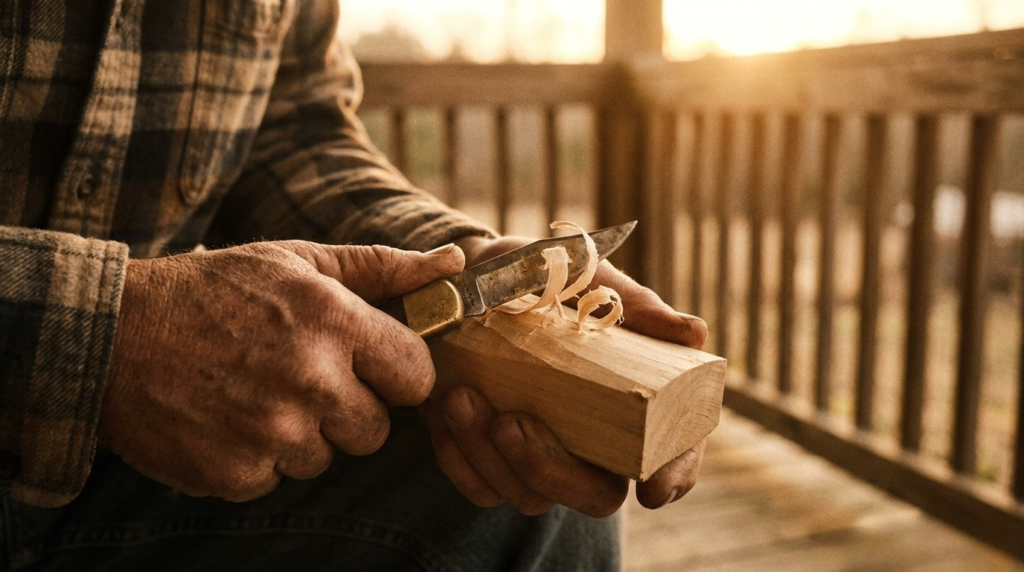
Yes, for the two cuts that cover most of a beginner project. Handyman Tips breaks whittling down to a handful of core moves:
- A push cut is where the knife blade is pushed forward into the wood to remove large amounts of material and shape the project. This move requires a firm grip and careful control the knife’s movement to avoid slipping.
- A pull cut is where the knife blade is drawn towards allowing for more control and precision. It is used for detailing and enhancing shapes. This cut uses the thumb of the hand holding the wood to improve stability and control. This cut requires attention to not pulling the knife too close to the body.
Almost every beginner shape — a rounded point, a flattened plane, a simple curve — comes from some combination of those two cuts, not a wider vocabulary of specialized techniques. What takes longer to learn is judgment: how much wood a single cut removes, and when to stop. That only comes from finishing a few pieces, not from reading about it.
If you’re someone who has been put off by hobbies that require refined technique before anything is made, whittling can provide a sense of accomplishment right out of the gate, as long as you start small.
What Wood and Knife Should a Beginner Actually Start With?
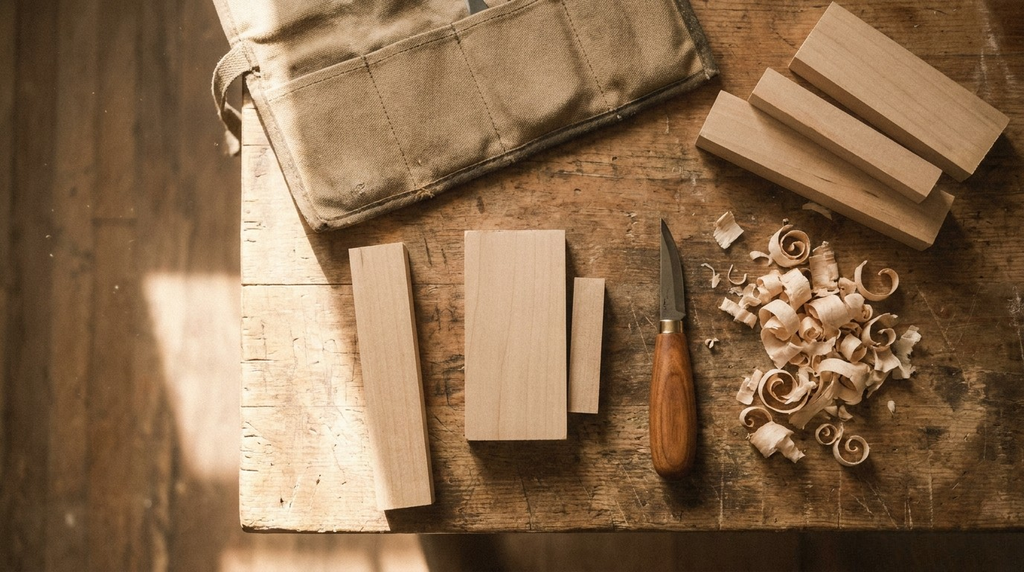
Basswood, and one knife. Because basswood’s low density and straight grain mean less resistance and less hand fatigue, a first session can run 30 to 45 minutes without the forearm giving out, which matters more for a beginner than any tool spec does. A single fixed-blade or locking folding knife with a 2- to 3-inch blade covers push cuts, pull cuts, and basic detail work; a full set of gouges and V-tools is a second-hobby purchase, not a first-week one. Pine and balsa work as cheaper backups, though pine’s sap means wiping the blade more often and balsa is soft enough to crush under a heavy hand rather than cut cleanly.
If you’re tempted to buy a full carving kit before finishing a single piece — remember the wood matters more than the tool count.
Is Whittling Safe for Beginners, or Is the Knife the Problem?
It’s safe with basic technique, and the knife is rarely the actual problem — a dull one is. Handyman Tips is explicit on this point: a beginner should always carve away from the body, wear carving gloves, have patience with the process, and whittle in a well-lit place. A sharp blade requires less force and is more predictable than a dull one, which is the opposite of what most first-timers assume going in. Most whittling injuries beginners actually report are shallow nicks to the fingers holding the wood, not deep cuts from the blade hand — which is exactly why a cut-resistant glove on the holding hand, not the knife hand, is the one piece of safety gear worth buying before the first session.
Anyone that has avoided whittling specifically over safety concerns — the risk is real but manageable, not a reason to skip the hobby.
Will a Beginner’s First Carving Look Good on a Shelf?

Yes, if the first project is chosen for its shape, not its detail. A simple wooden hook, a rounded spoon, or a geometric shape reads as intentional home decor the moment it’s sanded and oiled — no advanced skill required to make a clean, displayable object out of a few confident cuts. That’s part of why the hobby is having a visible moment:
Pinterest’s 2026 trend data, covered by Social Media Today, shows searches for “whittling projects for beginners” up 190% and “easy woodworking projects” up 316% year over year, right alongside a broader swing toward tactile, hands-on hobbies people can actually display.
Whittling for the finished object as well as for the screen-free time it buys will grow over time as skill progresses. The best part of whittling is even the first projects can be endearingly appreciated when chosen for simplicity.
What to Expect / Objections
Most people who quit whittling in the first week hit one of three walls, and none of them are a lack of talent.
The wood was wrong. A first project in oak or walnut fights back. When more force is needed per cut, there is less control and more slips. The fix is switching to basswood or pine before blaming the hands.
The knife was dull. A dull blade needs more pressure to cut, and more pressure is what actually causes slips toward a thumb. A cheap sharpening stone and two minutes of stropping before each session prevents more injuries than any glove does.
The first project was too ambitious. A detailed animal figure with thin legs and fine features is a fifth-project skill, not a first one. Starting with a straight-sided shape — a hook, a wedge, a rounded point — builds the two core cuts without the frustration of a piece that keeps breaking.
Common Questions
Q: Is whittling easy to pick up with no craft background?
A: Yes. The two core cuts — push and pull — cover most beginner shapes, and a soft wood like basswood does most of the work for you. Expect a rough first evening and a noticeably cleaner second one; the skill curve is fast compared to most hands-on hobbies.
Q: Is whittling safe, and what safety gear do beginners actually need?
A: It’s safe with basic technique: carve away from the body, keep the blade sharp, and use a cut-resistant glove on the hand holding the wood. Minor nicks are common early on; deep cuts are rare once the away-from-the-body habit is automatic.
Q: What’s the best wood for whittling for beginners?
A: Basswood, for its soft, even grain and low resistance to a knife. Pine and balsa work as cheaper backups, though pine’s sap and balsa’s fragility make basswood the more forgiving choice for a first several projects.
Q: How long does a first whittling project actually take?
A: A simple shape — a hook, a small geometric form — usually finishes in two to four sessions of 20 to 30 minutes each. A first detailed piece, like a small animal, can take several evenings longer as the two core cuts become automatic.
The Bottom Line
Whittling is beginner-friendly, but only once the variable that determines difficulty — wood, not talent — is set correctly. Basswood, one sharp knife, a shape without fine detail, and the technique doesn’t take long to feel automatic. Whittling provides a finished object and a screen-free block of time. But importantly, it travels as easily as a phone does, which is the real reason it works as a swap.
Not sure whittling is the right screen-free swap for your evenings? Take the Swap Quiz to find your best Stop Scrolling swap.
Sources
Whittling with Basswood: A Beginner’s Complete Starter Guide — Exotic Wood Zone
How Long Does It Take to Break a Phone Habit? — Habit Doom
Whittling for Beginners: A Step-by-Step Guide to Wood Carving—Handyman Tips
The intentional man: 2026 Men’s Trend Report from Pinterest