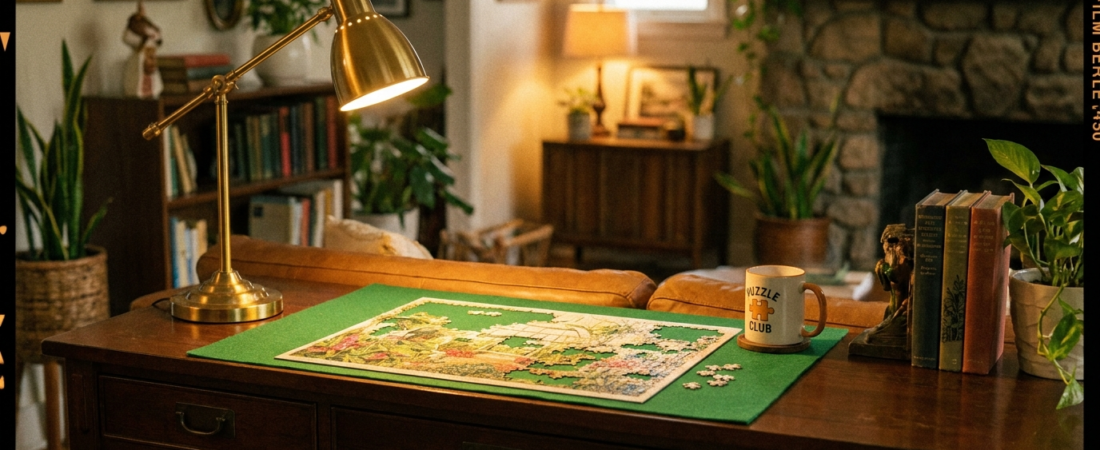
A puzzle station gets you off your phone for one plain reason: it removes the friction of making a decision. Set up a stable surface with a jigsaw puzzle already half-built, and you sit down without negotiating with yourself first — a phone that would otherwise fill a spare twenty minutes never gets picked up. Puzzle night doesn’t run on willpower once the station exists; it runs on proximity. Setting up a puzzle station can transform your screen-free resolution from a promise you feel guilty about breaking to an easy swap you feel good about making. With reviews.org reporting in their “Cell Phone Usage Stats 2026” article that Americans check their phone an average of 186 times a day and that 46% consider themselves “addicted” to the device, adding a simple, accessible substitution, especially for use in the evenings, is a healthier, more sustainable approach to your screen reduction efforts.
Why an Always-Out Station Beats Willpower
I have been running an always-out puzzle setup on a corner of my dining table for several weeks now. A folding tray came first, then a card table — but both got put away within days because wherever I put them, they were always in the way. I finally settled on a puzzle board with a cover and drawers that secures loose pieces and slides under the couch in about ten seconds. You’ll find my favorite puzzle board in the Busy Hands Kit.
The mechanism at work is activation energy, not motivation. Oprah Daily’s coverage of positive-psychology researcher Shawn Achor describes his “20-second rule”: moving a habit even 20 seconds closer to reach was enough to make it stick daily, and moving one 20 seconds further away was enough to break it within days. A phone sits zero seconds away in a pocket. A puzzle that has to be located, cleared for, and re-boxed every night sits well past that threshold — so the phone wins by default, not because anyone chose it. An always-out station flips the math: the puzzle becomes the path of least resistance instead of the phone.
There are additional benefits working in the puzzle’s favor. In the Reader’s Digest article “Are Puzzles Good for Your Brain? 7 Top Cognitive Benefits” Elizabeth Yuko interviewed a variety of experts about the pluses of puzzle-solving. While the jury is still out on measurable results, the experts highlight increased brain activity, better cognitive skills, sense of satisfaction, stress reduction, improved mood, and slowed cognitive decline as great reasons to make regular puzzle-solving a part of your routine. And since you’re engaging with a puzzle instead of your phone, the negative impacts of doomscrolling can be significantly reduced.
At a Glance: What the Station Needs
- A surface that can stay out between sessions — table corner, console top, or a dedicated tray
- Contained storage that closes in ten seconds, not a box lid you have to go find
- A light source separate from the overhead fixture — a warm task lamp or clip light
- A seat that isn’t the couch, so the station reads as its own activity, not TV backup
- A piece count sized to a weeknight, not a weekend project
- The box lid propped up nearby as a reference image
Step 1: Choose a Surface That Never Has to Come Down
The single biggest reason a puzzle habit dies is that the surface has other jobs. A card table or folding tray works for exactly as long as nobody needs to eat, work, or set down groceries — which in most houses is not long. The surfaces that survive are ones nobody else is competing for: an underused console table, a corner of a sideboard, a rolling cart tucked against a wall, or a dedicated card table kept permanently in an out-of-the-way spot rather than folded after each session.
If a shared table is genuinely the only option, a rigid puzzle board or tray that lifts the whole session off in one motion solves the same problem without needing new furniture. The test is simple: can you walk away mid-piece and come back to find it exactly as you left it? If not, the surface is the wrong one, whatever it looks like.
The fix here isn’t square footage. Pick furniture nothing else in the house competes for — that’s the whole problem solved.
Step 2: Give the Pieces a Home That Takes Ten Seconds
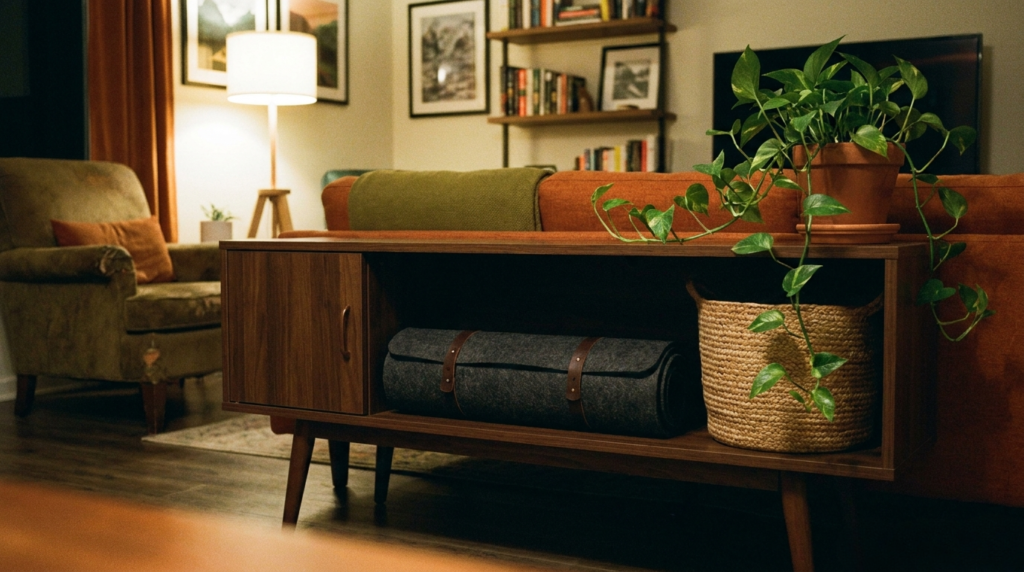
Storage is where most puzzle setups quietly fail. A box lid is fine for pieces still in play, but it doesn’t stack, doesn’t hide clutter, and tips easily. The options that actually get used daily are a shallow lidded board that slides under furniture or a felt or vinyl mat that rolls a partly-finished puzzle into a tube.
Match the storage to how visible you want the station to be. A woven basket or a wooden tray reads as intentional decor and can sit out in the open. A roll-up mat is built to disappear completely between sessions. This is better for anyone who wants the room to look untouched by hobby gear most of the day.
After trying several of these, I found a puzzle board worked the best for me because it retained the sorting and progress made without requiring steady hands and meticulous movement to get the puzzle tucked away. No worries I would lose my work by tipping over a bin or rolling the mat too quickly.
An easily storable puzzle board or mat is best for households where leaving a puzzle out is a problem. The storage device makes keeping to the 20-second rule possible.
Step 3: Light the Station Like an Evening, Not an Office
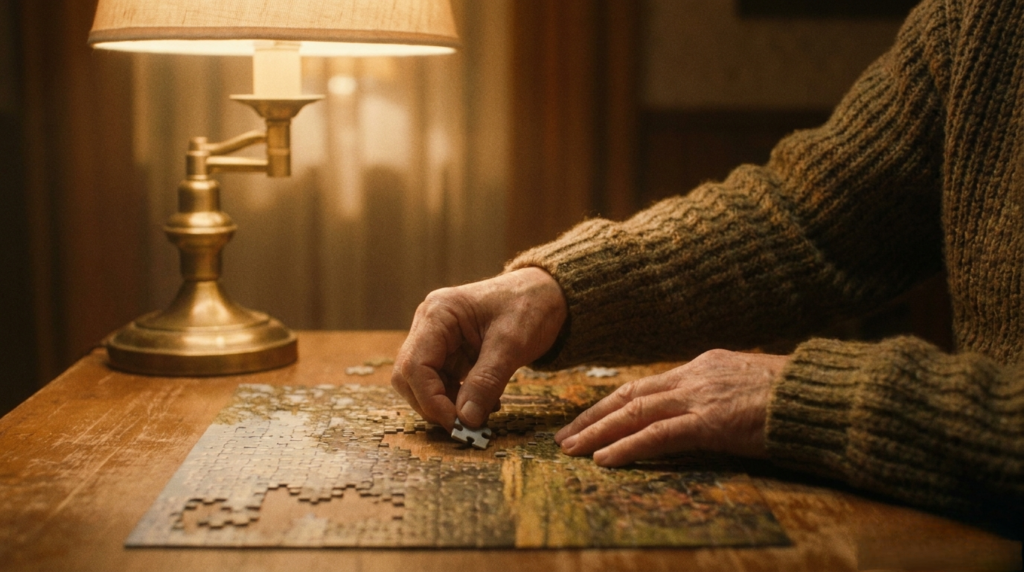
Overhead ceiling light is the fastest way to make a puzzle station feel like a chore instead of a wind-down. A warm-toned task lamp, a clip light aimed at the surface, or a pair of small battery candles nearby does two things at once: it makes the fine detail of matching pieces easier on tired eyes, and it visually signals that this corner is for evening, not errands.
This is also the easiest way to integrate the station into your decor. Warm light, a texture mat under the puzzle, and plant nearby looks deliberate rather than makeshift. This is worth doing properly if the station is located somewhere guests will see it.
An extra bonus of soft lighting is that it can easily become a bedtime ritual to help with sleep. Studies show that phone use 30 minutes before bedtime can reduce quality and duration of sleep and increase daytime fatigue. According to the Sleep Foundation, the hour before bed should consist of relaxing activities that don’t involve devices with screens, so spending time at your puzzle station before bed is a great way to wind down your screen-time.
Step 4: Match the Seat and the Piece Count to an Actual Weeknight
A dining chair or a stool, not the couch, keeps the station from quietly turning into another spot to sit and scroll. The couch already has a phone habit built into it; a puzzle needs its own seat to build a separate one.
Piece count matters more than most people expect. A 1,000-piece puzzle is a weekend project — pulling it out on a Tuesday guarantees it looks the same on Friday, which reads as failure even when nothing went wrong. A 300- to 500-piece puzzle finishes in roughly a week of 20- to 30-minute evenings, which matches how most screen-free evenings actually get spent. I found that 300-500 was the sweet spot for my puzzle habit. Going above that often made the project feel too complex to stick with.
If you’ve abandoned a big puzzle before, this is the change that matters. Not more willpower — a smaller puzzle that finishes while it still feels like progress.
Where This Falls Apart

The station gets buried. Mail, keys, and laundry migrate onto any flat surface left open, and a puzzle station is no exception — the fix is picking a surface with a lip, tray edge, or slightly awkward shape that makes it a worse landing spot for random clutter than the counter six feet away.
Before I found a good storage plan, missing pieces often killed the fun of completing a puzzle. My cat found many ways to disrupt, tip over the box, or scoot the pieces off the table without me realizing it. More than once the vacuum found the wayward pieces before I did. By then I was frustrated and annoyed and had given up on the project. A puzzle mat that rolls and zips or a board that closes solves this more reliably than any box, since a loose lid is an invitation and a sealed roll or closed board isn’t.
Without a storage plan, the puzzle station starts to feel like more clutter, not less. This usually means the piece count was too ambitious to finish quickly, or the storage wasn’t actually right — if putting it away takes longer than ten seconds or puzzle solving takes too long, you’ll probably quit within a week, no matter how good the intentions were.
Common Questions
How much space do you need for a puzzle station?
Enough for the puzzle itself plus a few inches of margin — roughly a 2-by-3-foot surface for a 500-piece puzzle. A console table, a rolling cart, or one end of a sideboard is usually enough; you don’t need a dedicated room or a full table.
What size jigsaw puzzle works best for a regular puzzle night?
Most people find 300 to 500 pieces finishes in about a week of short evening sessions, which keeps momentum without turning into a weekend-only project. Puzzles over 1,000 pieces are better saved for stretches with more open time.
Can a puzzle station work without a dedicated table?
Yes — a rigid puzzle board or a roll-up mat lets the whole session lift off a shared table in one motion, so the table can go back to its other jobs without the puzzle losing its place.
How do you keep a puzzle station from looking like clutter?
Contain it. A woven basket, a lidded tray, or a roll-up mat gives loose pieces one visible home instead of several scattered ones, which is usually the difference between a station that looks styled and one that looks abandoned.
The Bottom Line
A puzzle station works because it changes what’s easiest to reach, not because puzzles are inherently more appealing than a phone. Set the surface, the storage, and the light up once, and puzzle night stops being something you have to talk yourself into — it’s just what’s already out. That’s the whole trick behind trading scroll time for screen-free evenings: move the friction, not the willpower.
Not sure which analog swap actually fits your evenings? Take the Scroll Swaps Quiz to find your best options to successfully stop scrolling.
Sources
The 20-Second Rule to Build Better Habits — Oprah Daily
Are Puzzles Good for Your Brain? 7 Top Cognitive Benefits – Reader’s Digest
How Electronics Affect Sleep — Sleep Foundation
Cell Phone Usage Stats 2026 – reviews.org